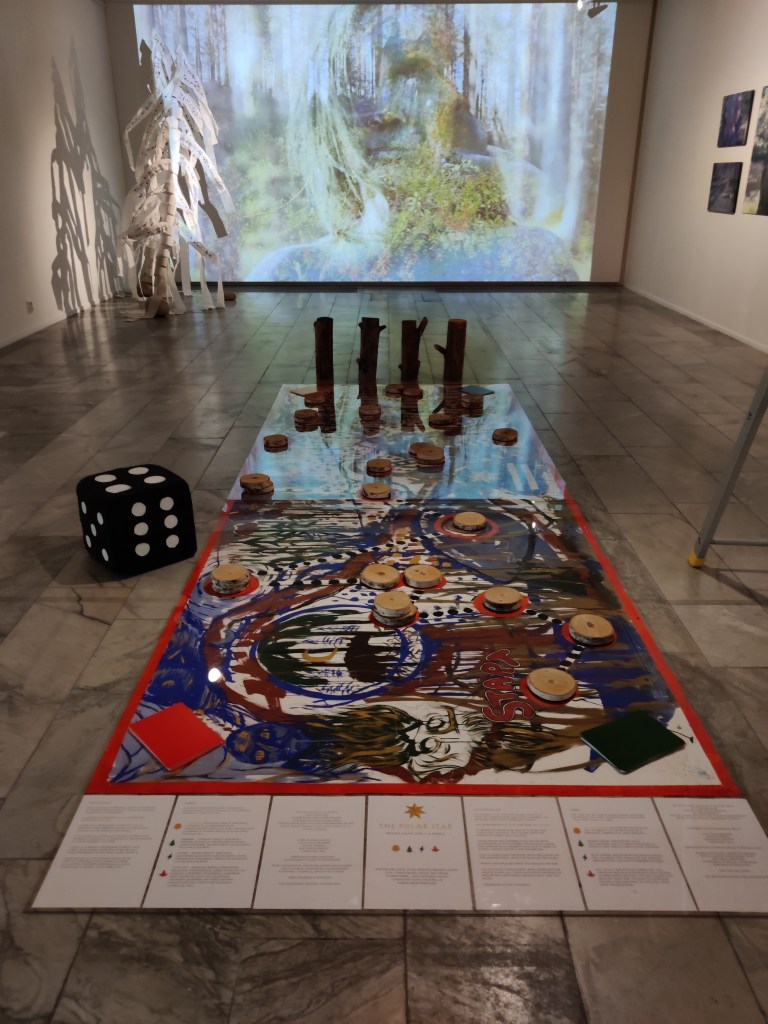
The theme of forest disputes is related to the global collapse of biodiversity, the multiple uses of forests, the cultural significance of forests and the massive pulp mill projects being prepared in Lapland. The forest disputes group included artist-researcher Katja Juhola, Spanish-born artist Misha del Val, painter Satu Kalliokuusi and forest researcher Ville Hallikainen. The group began planning the workshop by discussing the roots of the conflict. This included discussions on emotional connections or disconnections and lack of scientific knowledge on the issue. The team also became acquainted with different forest types and different uses of forests. The team facilitated conversational art among three different groups. In two groups, the participants were students and a teacher from the Muonio Wilderness Guide School. In the third group, the participants were two local nature lovers and a group of forestry research experts from the Metsähallitus (a state-owned forestry enterprise in Finland) and the Natural Resources Institute Finland (Luke). The participants produced paintings, photographs, videos, performances and installations. The group of artists produced the exhibition works as independent and joint productions, all of which came from a common experience and formed a set of works. The artists used their own means of expression. One work was co-produced by the forest dispute team as a large Stella Polaris game imitating an African Tähti, a common Finnish board game. The game was based on a large painting jointly created by the forest disputes team, local forest owners, Metsähallitus researchers and Luke researchers. It also involved the whole of ISEAS by incorporating research knowledge from each of the ISEAS groups (including from Hallikainen, Joy and Ramm-Schmidt).


My installation Paper Forest is the result of discussions held during the ISEAS symposium. The words and phrases I wrote on toilet paper rolls are excerpts from conversations between scientists, nature activists, artists, and wilderness guide students regarding the state of our northern forests. They reflect both the fears and hopes of what humanity is capable of concerning our natural resources.
My video artwork Forest (10 min 31 sec) consists of discussions held with participants during the symposium. The voices of the researchers, nature activists, wilderness guide students, and artists are included. The colors symbolize the four seasons and the destruction humankind brings to nature—how we treat our forests and ourselves. The loss of natural biodiversity is a real threat to all life. The nudity in the film represents a vulnerable, sensitive, and emotional relationship with nature and the threats against the forest. After the symposium, a video performance was held in Äkäslompolo in August 2020. I was assisted by my spouse, Jukka Juhola, and the symposium artist, Tanja Koistinen.
The conversations included the following participants: Lea Kaulanen, entrepreneur, Äkäslompolo; Ville Hallikainen, senior researcher, Rovaniemi; Student from Muonio Wilderness Guide School, Raisa Raekallio, visual artist, Kittilä; Meeri Koutaniemi, photographer, Helsinki; and Misha del Val, visual artist, Kittilä/Basque Country.
Together, Kalliokuusi and I created a large board game, Stella Polaris, inspired by the Finnish game Afrikan Tähti and based on a collective painting. This game involved local forest owners and researchers from Metsähallitus and LUKE, and integrated research and artistic perspectives from all the ISEAS groups.
Stella Polaris is an artistic board game for 2–4 players, focusing on the natural phenomena of Northern Finland and the conflicts between human activities and the local environment
 Katja Juhola